
IPTV vs Cable TV in 2026: Which Is Worth Your Money?
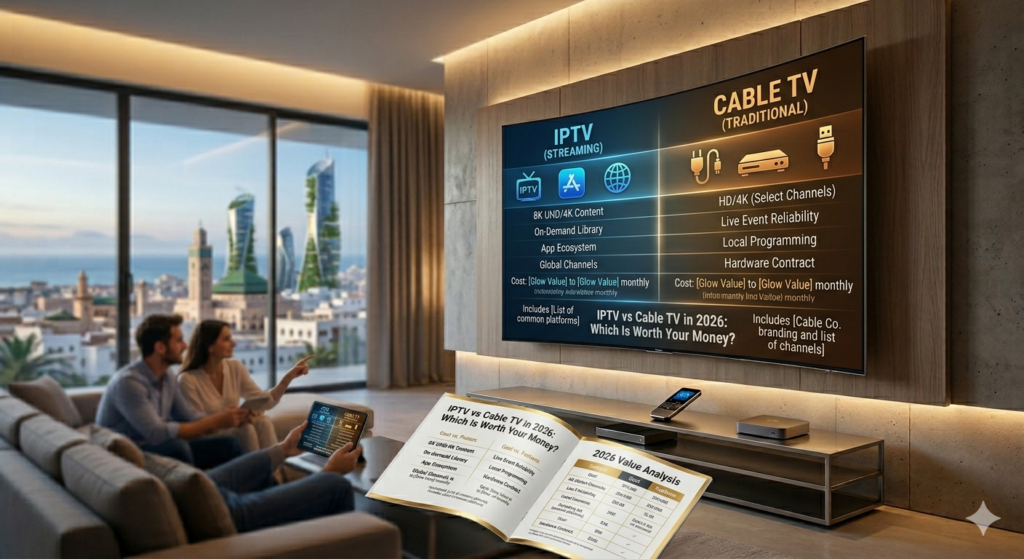
IPTV vs Cable: Complete Side-by-Side Comparison (2026)
The iptv vs cable comparison in 2026 comes down to three things: price, flexibility, and your internet speed. When you stack iptv vs cable on cost alone, legal streaming services win by $40–80/month. This iptv vs cable guide gives you every fact you need to decide — so you can finally cut the cord or stay with cable knowing you made the right call.
The IPTV vs cable debate has a clear winner in 2026 — but the right answer depends on your needs. This guide covers every angle of IPTV vs cable: cost, channels, quality, and flexibility. By the end, you’ll know exactly how IPTV vs cable stacks up and which is right for you.
The Cable vs. IPTV Question More People Are Asking
The comparison between IPTV and cable TV comes up constantly in cord-cutting communities, and for good reason. Cable TV prices have risen by an average of 6% annually for the past decade, while IPTV services have simultaneously improved in quality and reliability. Understanding what each delivers — and what each costs — helps you make a genuinely informed decision.
Cost: The Most Obvious Difference
Cable TV packages in the United States average between $85 and $130 per month when you include equipment rental fees, regional sports surcharges, and broadcast TV fees. Contracts of 12 to 24 months are standard, with early termination penalties commonly running $150 to $350.
IPTV subscriptions typically cost between $10 and $25 per month with no contract requirements. There are no equipment rental fees because you use hardware you already own, and pricing is transparent upfront. Over a 12-month period, switching from cable to IPTV represents a realistic saving of $700 to $1,200 for most households.
| Factor | Cable TV | IPTV |
|---|---|---|
| Average monthly cost | $85–$130 | $10–$25 |
| Contract required | Usually 12–24 months | No — month-to-month |
| Installation needed | Yes — technician visit | No — self-setup |
| Number of channels | 200–500 regional | 5,000–30,000+ global |
| International content | Very limited | Extensive |
| Simultaneous streams | 1–3 (per set-top box) | 1–5+ per subscription |
| Mobile viewing | Limited via app | Full access on any device |
Content: Where Each Service Leads
Cable TV still holds a meaningful edge in one specific category: regional sports broadcasting. Local sports networks carrying teams’ full game schedules are not universally replicated in IPTV. If following a specific local team across a full season is your primary viewing habit, verify that an IPTV provider covers your required regional sports network before cancelling cable.
In every other content category, IPTV is competitive or superior. International channels, multilingual programming, and global news coverage are dramatically broader on IPTV.
Reliability: An Honest Assessment
Cable TV signals are independent of your internet connection. Rain, network congestion, and router issues do not affect cable picture quality. This remains a genuine advantage — particularly in areas with slow or inconsistent internet infrastructure.
On a connection of 50 Mbps or above with reasonable stability, however, a quality IPTV service is functionally indistinguishable from cable in reliability terms during normal viewing.
According to industry research, the average American household now spends more on streaming subscriptions combined than they did on a single cable bill five years ago. Strategic use of IPTV alongside one or two SVOD services delivers the widest content at the lowest total cost.
Flexibility: No Contest
IPTV wins the flexibility comparison decisively. With cable, your viewing experience is tied to a physical location and a specific set-top box. With IPTV, you watch on the TV in your living room, your phone during a commute, or your laptop while travelling — all with the same subscription.
Who Should Keep Cable TV?
Cable remains the right choice for specific situations: households in areas with internet connections below 25 Mbps, viewers who depend heavily on a specific regional sports network not covered by available IPTV providers, or users who want a fully managed service requiring zero self-setup. For everyone else, the combination of cost, content breadth, and device flexibility makes IPTV the stronger proposition in 2026.
Frequently Asked Questions
Can IPTV replace cable TV completely?
For most households, yes. A reliable IPTV service covers live sports, entertainment, news, and international content at a fraction of the cable cost. The main exception is regional sports networks, which are not universally available through IPTV providers.
Is IPTV picture quality as good as cable?
On a connection of 25 Mbps or above, HD IPTV streaming is visually equivalent to cable. 4K IPTV, where available, exceeds what most cable providers currently offer in terms of resolution and HDR support.
For households with reliable internet above 25 Mbps, IPTV offers more channels, global content, mobile flexibility, and savings of $700+ per year compared to cable — with no contract. Cable retains a narrow advantage for regional sports coverage and areas with poor internet infrastructure.
Looking for the best IPTV service in 2026? These related guides cover setup, comparisons, and troubleshooting to help you choose the right streaming service.
Related Guides
- Best IPTV Service Providers in 2026
- What Is IPTV? A Beginner’s Guide
- How to Set Up IPTV on Any Device